
Description
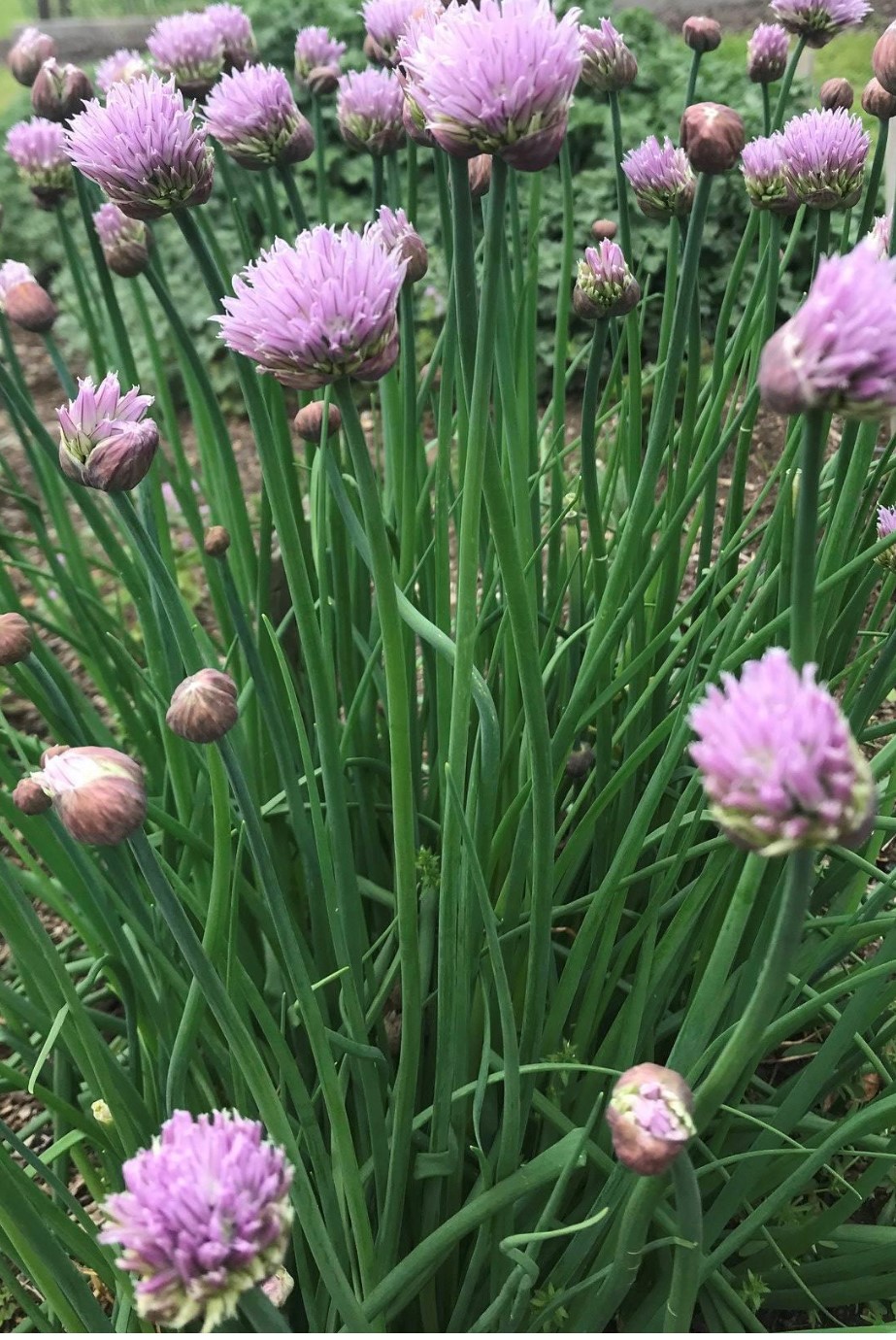
(Perennial) (Allium Schoenoprasum)
Common Chives are the oldest known edible onion dating back 5000 years and are an essential herb to have in your garden! The long, thin, stalks have a fantastic onion flavor that is a perfect fresh or cooked and is super versatile! Chives are beneficial plants, repelling numerous pests from your garden and produce beautiful purple flowers the second year that attract tons of pollinators!
Sowing: Chives grow well in a variety of soil types, though they prefer rich, well drained soil and full sun or partial shade. The seed can be started indoors about 4 weeks before the last spring frost; provide bottom heat, consistent moisture, and darkness for fastest germination. Common chives seeds should sprout within 2-3 weeks; they can be transplanted 6-8″ apart as soon as they grow big enough to handle safely, and there is no chance of frost. To direct sow, plant common chives seeds after the last frost of spring 1/4″ deep in rows 18″ apart, thinning to 6-8″ apart as soon as the seedlings appear. Chives also grow well as a container plant. For companion planting benefits, plant chives with carrots; this improves the carrots’ flavor and production.
Growing: Keep the soil moist while the seedlings are developing. Chives will spread vigorously with each year of growth, and can easily be divided for new plantings. After several frosts, cut the plant down to the ground.
Harvesting: The first year of their planting, chives should not be harvested to ensure their strong development. In the second year of their growth, harvest chives at any time after they reach a length of 6″, cutting them 1/2″ above the soil with a sharp knife or scissors. Take care not to cut all of the leaves, since the plant needs some left intact to continue healthy growth. Frequent cutting actually improves production, since this signals new growth; the growth of the flowers causes the leaf growth to slow dramatically and gives them a harsher flavor. The leaves keep in the refrigerator for about a week; they can also be frozen, but lose all flavor when dried. The leaves should be added to hot dishes at the last minute, since they soon lose their flavor with heat. The onion-flavored buds and flowers are also edible and make wonderful garnishes.
Seed Saving: Allow the flowers to mature and develop seed heads. When the seed heads turn brown, remove them before they open and drop their seed. Spread them out to dry in a protected location away from direct sunlight. Rub the dried heads to separate the seeds from the pods. Store common chives seeds in a cool, dry place for up to 2 years.
**We have included smaller, sample size quantities of Common Chives which are great to start small herb gardens in limited spaces, but we highly recommend buying at least an 1/8 Ounce to start and establish a decent amount of chives if you enjoy eating them regularly.
Reviews
There are no reviews yet.